Keep comparing
Move from this focused guide into broader AIForest discovery paths.
Hurry up — get early exposure, backlinks, traffic, and reach thousands of AI enthusiasts before slots fill up.
Use this Cursor alternative guide to compare AI coding environments, editor extensions, cloud IDEs, and agentic development tools.
Who this helps
Developers, engineering managers, startup teams, agencies, platform teams, and students comparing AI coding workflows.
Common use cases
How to compare
Directory paths
Use these high-intent paths to compare tools by workflow, alternative, or founder listing intent.
Move from this focused guide into broader AIForest discovery paths.
List or improve an AI product that belongs near Cursor Alternative.
Alternative comparison guide
Cursor is often a serious shortlist option because it puts AI chat, code editing, repository context, autocomplete, and multi-file changes inside a developer-focused editor. A search for a Cursor alternative usually means the buyer already understands the category and is looking for a better fit, lower cost, different workflow, or less friction. That is a stronger purchase-intent signal than a generic best-tools query.
The main reasons to compare alternatives are editor preference, enterprise controls, pricing, model access, local workflow, cloud development needs, codebase size, or desire for a different agent experience. A good alternative page should not simply list competitors. It should explain when Cursor still makes sense, where it may be limiting, and which alternative patterns are worth testing before a team changes tools.
Start with repository understanding, autocomplete, chat quality, diff review, test generation, terminal workflow, extension support, model choice, and codebase navigation. The right feature set depends on the work being repeated every week, not the longest marketing checklist. Compare how each product handles the source material, generates output, supports revisions, exports finished work, and fits the surrounding software stack.
Feature depth also includes control. A strong alternative should let users provide examples, preserve useful context, collaborate with teammates, recover from weak outputs, and understand why a recommendation was produced. If a tool only performs well in a demo prompt, it may not survive real production work.
Pricing should be judged through individual seats, team controls, usage limits, premium model access, privacy terms, and whether agent usage creates predictable development cost. Do not compare subscription prices alone. AI tools can differ on seats, credits, generation limits, model access, exports, storage, collaboration, API usage, and admin controls. A cheaper plan can become expensive if it creates more review work or forces manual handoffs.
Verify current pricing directly on official product pages before buying because AI plans change quickly. For purchase-intent pages, the durable question is whether the alternative gives the buyer the right balance of output quality, predictable limits, team control, and total workflow cost.
Cursor is usually strongest when developers want an AI-native editor that can understand project files and help make reviewable changes without leaving the coding environment. These advantages matter because switching tools has a cost. If the product already fits the team's daily workflow, the best decision may be to improve prompts, templates, governance, or integrations instead of replacing it.
The product also benefits from user familiarity. Teams that have already built habits around a tool may move faster because they know its quirks, review needs, and export paths. Any alternative needs to beat that existing comfort by solving a specific problem, not just looking newer.
Cursor may be a weaker fit when a team is standardized on another IDE, needs stricter governance, prefers cloud workspaces, wants deeper pull-request integration, or needs different language and infrastructure support. These limitations are not always product failures; they may simply reveal a mismatch between the buyer's workflow and the product's center of gravity. The important thing is to name the mismatch before procurement or migration starts.
Watch for hidden costs such as correction time, missing integrations, weak exports, confusing permissions, limited collaboration, stale context, or outputs that need heavy rewriting. Those issues often matter more than headline model quality because they decide whether a tool becomes part of the operating rhythm.
The best alternatives usually fall into IDE extensions, AI-native editors, cloud development environments, coding agents, and broader developer productivity platforms. A focused shortlist should include one close substitute, one specialist tool, and one workflow-adjacent option. That mix keeps the evaluation honest: some buyers need a similar product with different pricing, while others need a narrower tool that handles one job better.
Prioritize alternatives with safe diffs, fast context retrieval, reliable tests, security controls, low latency, editor compatibility, and strong fit with existing Git workflows. Then test them using one bug fix, one test-writing task, one multi-file refactor, one unfamiliar-code explanation, and one review for security or maintainability. The winner is the product that reaches an approved result with the least friction, not necessarily the one with the most recognizable brand or the largest feature page.
Explore relevant AI tools and compare their features, pricing, and fit for your workflow.
FAQ
The best alternative depends on your workflow, budget, integrations, review needs, and output quality requirements. Test close substitutes and specialist tools with the same real task before choosing.
Consider switching when pricing, workflow fit, collaboration, exports, privacy terms, or correction time consistently block the work you need to complete.
Compare current plan limits, seats, credits, exports, admin controls, and review time. The cheapest subscription is not always the lowest-cost workflow.
AI-powered IDE for faster coding Pros include Easy vscode extensions migration One-click keybindings and themes import Local mode for privacy No data stored in servers/logs Chat with projects feature Codebase query ability Seamless documentation browsing Code definitions access within editor Spotting and fixing bugs feature Automated linter errors investigation Automatic stack traces checking GPT-4 technology integration Context-aware coding experience Significantly reduces prototype time Loved by developers worldwide Pair-programming focus Efficient code changes implementation Code from-scratch generation Method or class change prompts Aides in understanding codebase. Considerations include No mobile app Limited language support Dependence on GPT-4 No web version No collaborative feature No data-cloud option Inherited VSCode's limitations No version control integration Lacks refactoring functionality Limited debugging features.
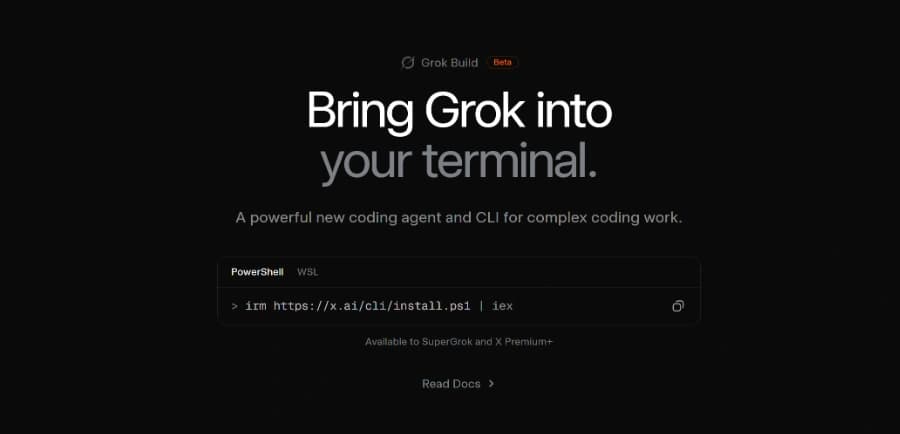
An open-source command-line tool that gives developers direct access to Grok models from their terminal. You can code, converse, and automate AI tasks without leaving your usual development environment
All-in-one private LLM and RAG desktop app for Mac, Windows, and Linux Pros include Supports multiple users Privacy-focused design Operable without internet Compatible with various LLM Supports diverse document formats Customizable interface Advanced developer API Installable on any desktop Compatible with MacOS and Windows Allows user control Supports enterprise models Supports custom models Supports open-source models Standalone application capability Internal and external operations Plug-in-free operation Any model, any document One-click installation Compatibility with GPT-4 Sky as limit customization Operates with explicitly connected services Doesn’t restrict LLM provider Unlimited LLM control Enterprise-ready tool Comprehensive solution Can function offline Offers full control Privacy-centered solution Runs on machine without internet Appearance customization Diverse document support. Considerations include No mobile compatibility Requires explicit connectivity No Linux support Over-reliance on personal customization Potential overload with diverse models No multi-language support indicated No automatic updates indicated Limited document format support.
Ask AI any question, get instant, accurate answers. Pros include NLP technology Large-scale Transformer model Doesn't store searches Instant feedback Search in academic books Search in wikis Search in forums Natural language queries Trained on reliable sources Unbiased answers Compatible with all types search Detailed factual answers New updates Free tool. Considerations include No mobile app No multilingual support No query history Not a collaborative tool No customization settings No voice search feature No tutorial or guide Cannot filter or sort results Doesn't provide source links No direct developer support.
Connect your AI tools (Claude Code, Cursor, Windsurf, etc.) directly to the Shopify platform via MCP plugins to create apps, validate code, and manage your store using natural language. Documentation, API schemas, and validation are built-in so that the agent never has to make assumptions
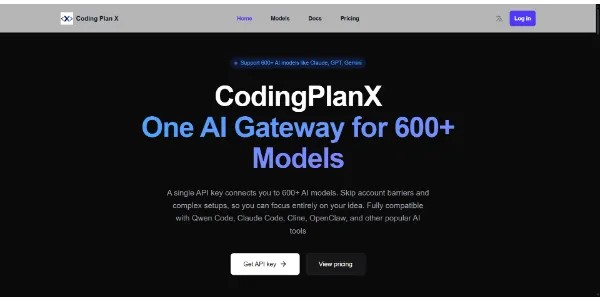
Access over 600 AI models (Claude, GPT, Gemini, DeepSeek) using a single OpenAI-compatible API key. The tool intelligently routes your requests to reduce costs and works natively with Cursor, Cline, and Claude Code
The confident path for AI agents. Pros include Real-time debugging Global GPU network Latency tracking Cost tracking Real-time metrics Low latency global delivery Reliable scale Visibility into prompts Visibility into API calls Visibility into memory fetches Visibility into tool usage Agent reasoning chains tracking Faster debugging of errors Automated performance scoring Automated quality checks Human-in-the-loop evaluations Enforceable safety mechanisms Content filters Multi-agent workflows orchestration Context-aware memory retrieval Supports prototype to production Inference under 50ms Monitor live agent behavior Compose smart agents Stateful memory for agents Intelligent systems designer Dynamic task routing $200 free credits offer Built for developers Suitable for startups No infra expertise required. Considerations include Not open-source May have high latency Limited multi-agent orchestration No prominent Infrastructure expertise Lacks certain safety mechanisms Limited context-aware memory retrieval Dependent on global GPU network No offline debugging options Console only login Undisclosed cost structure.
Buy verified AI API keys at massive discounts. Pros include Fingerprint-verified providers Weekly testing of channels Smart routing functionality Automatic route to cheapest provider Auto-failover for high uptime One key for all models Works with various tools Accepts global payments Inclusive of blocked regions Continuously adds new models Pay-as-you-go from $1 No subscription requirement API cost reduction Huge discounts on API keys Prevents model substitution Ensures genuine API procurement Can use USDT and Epay Hosts GPT 5.4 and 5.5 Hosts various Claude models Hosts various DeepSeek models Hosts MiniMax M3 Availability of GPT-Image-2 Transparent price comparison Saves up to 85% on Claude Accessibility in China, Russia, Southeast Asia Supports different languages Allows easy code integration GPT 5.4 API saves 98% Reaches out to channel providers Allows purchase with digital currency No need for credit card Compatible with Claude Code, Cursor Compatible with LangChain, LiteLLM Tests for genuine Claude, GPT-5 Listing for fingerprint-verified channels Ensure stable uptime Documentation for easy assimilation Transparent about uptime of channels Auto picks best route Filters for fingerprint-verified channels Transparency in process Open-source with MIT License Active customer support. Considerations include Limited payment options Dependency on third-party providers Unknown verification process transparency No free trial mentioned Possible billing issues with pay-as-you-go Provider's outage affects service Doesnt avoid region-specific internet problems Potentially slow support response Lack of customization for routing.

Discover a next-generation AI model designed for advanced use while remaining highly secure. You’ll enjoy top-tier performance for coding, analysis, and research, while safeguards block sensitive applications such as cybersecurity and biology

Take advantage of Anthropic’s AI model—more reliable, more honest, and four times less likely to overlook its own errors. Its fast mode delivers up to 2.5 times more tokens per second (at the same API rate as the previous version)
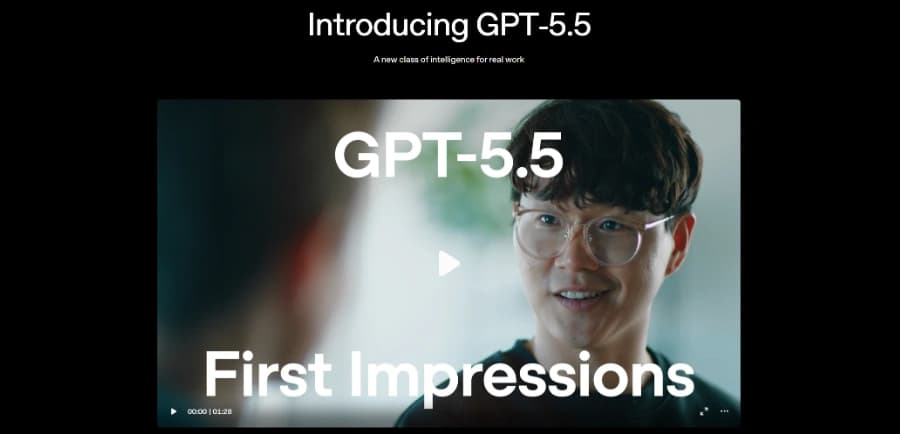
Tackle time-consuming and complex tasks by letting AI plan, use tools, check its work, and see tasks through to completion with minimal supervision. This model significantly improves coding, the use of virtual machines, online research, and knowledge work tasks
This Mixture-of-Experts model, with approximately 1 trillion parameters, features a 1M-token context, virtually infinite Engram memory, and multimodal capabilities for text, images, and video. It aims to achieve performance scores comparable to Claude Opus while remaining significantly more affordable (to be released under the Apache 2.0 license)
Use a more reliable and accurate ChatGPT. This new model significantly reduces hallucinations on sensitive topics (medicine, law, finance). It provides shorter responses and offers greater personalization based on your files, past conversations, and connected Gmail account
The new beta version of the xAI model, which is comparable in size to Grok 4.20 but features an improved architecture and knowledge updated through December 2025, is already being rolled out gradually
An open-source model designed for code and long-running tasks, with a context window of up to 1 million tokens. This Mixed Expert (MoE) LLM handles complex projects, analyzes entire repositories, and performs multi-step reasoning. It is available as open source under the MIT license

This open-source model takes agent-based programming even further with multi-file editing, 256K of context, and the generation of animated front-end interfaces. It also features swarms of up to 300 sub-agents capable of performing tasks continuously
AI-powered content creation, minus the hassle. Pros include Web-based tool Minimal formatting effort Customizable templates No coding required Efficient process Works on any device Embed various media formats Collaboration and feedback features Quick reactions Commenting feature Publishing tools Built-in analytics Transforms text into bite-sized pieces Optimizes engagement measuring One-click templates On-brand design No template lock-in Ability to re-style entire deck Flexible templates Nested cards Publishing and analytics Concise and visual content Interactive content Share across different devices Bite-sized content for comprehension Adaptable design tools Narrations and recodings Gamma memos can stand alone More visual than a doc More interactive than a video. Considerations include No offline capability No mentioned security features Limited device compatibility Lack of integration with other tools No version control for edits Requires strong Internet connection Depends on existing templates No accessibility information provided Collaboration features may be limited Analytics possibly lacking depth.
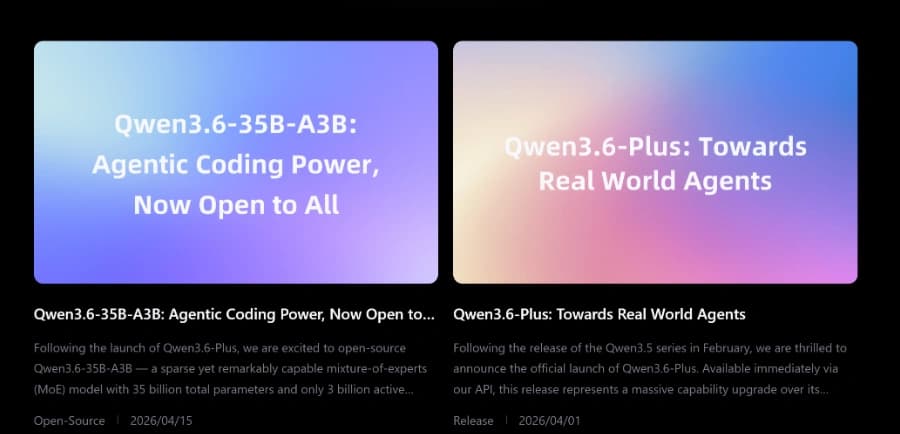
Run a 35-billion-parameter MoE model with only 3 billion parameters actually activated, while achieving coding, vision, and reasoning performance on par with much larger models. Optimized for agentic coding, multimodal perception, and very long contexts (up to over a million tokens)
Build software products using chat Pros include Chat-Based Software Development Natural Language To Code Codeless Development Software Prototyping Live Rendering Collaborative Branching GitHub Synchronization Entire Frontend from One Prompt API Integrations Backend Functionality Prototyping for Product Designers Instant Undo Select & Edit Feature Non-Technical Coding Workflow Automation Beautiful Design Generation Supports Databases Secure Codebase Synchronization Instant App Exporting Instant App Publishing Accommodates Various User Categories Rapid Prototyping for Founders Empowers Non-Technical Team Members Github Integration Support for Supabase Connector Best Practice UI & UX Own the Code Fine-Grained Changes Capability Automatic Code Sync Project hand offs support Advanced workflows support Fast and Intuitive UI Bugs Auto-fix One-click Deploy Loved by Product Creators 20x Faster Than Coding Bypasses Frontend Engineers Enables Backend Concentration Beautiful aesthetics Supports Non-Tech Coders Enables Real Prototypes Accelerates Validation Process Drastically Reduces Prototyping Work Handles Image Input Supports Collaborative Branching Features Loved by Thousands Own the Code Vision Ease of Editing App Superhuman Full Stack Engineer Quality-Ensuring Feature. Considerations include Chat interface may limit complexity Iterative changes may be slow Potential misunderstanding of verbal descriptions Unpredictable design outcomes Limited Undo Functionality Dependency on GitHub for synchronization No native versioning system High pricing for individual users Not suitable for low-end development Limited backend support.
Baidu's flagship model is more cost-effective and powerful: it requires only one-third of the resources of its competitors and achieves a score of 99.6 on AIME26. It outperforms DeepSeek V4 Pro on several practical benchmarks and ranks first among Chinese models on LMArena Text
AI CRM that remembers everything and does the work for you. Pros include Simplifies complex CRM tasks Automates standard CRM tasks Logs customer interactions Drives next steps Provides business operation answers Analyses emails and meeting transcripts No upfront configuration needed Allows data model evolution Enables personalized emails at scale Provides insights for product development Updates CRM data based on conversations Revives stale deals Fills in missing CRM data Gives holistic view of customers Performs meeting preparation Captures and summarizes meetings Allows bulk pipeline editing Suggests personalized customer outreach Provides comprehensive customer history Offers contextual understanding Serves as a smart assistant Helps proactive customer engagement Assists in product development Manages pipelines based on actual conversations Improves work efficiency Fast access to crucial customer information Understands full customer context Automated meeting updates Captures conversation records shared Understands company, product, market context Performs business-related questions answering Enables bulk personalized emails Provides stronger customer insights to engineers Revives dormant deals Enriches accounts or contacts data Offers built-in call recorder Furnishes answers with original conversations citations Sends personalized outreach based on discussed content Performs mass updates based on spoken conversations Automates tailoring revival emails Structured fields and unstructured data contextual query Supports mass record exports Improved workflow triggers Enhanced LifeField record data pushing MS Outlook integration Supports International phone numbers Improved global search reliability Improved tasks and record updates suggestions Customizable meeting recorder appearance. Considerations include No upfront configuration Dependent on data quality Requires JavaScript Lack of explicit privacy measures Not suitable for established companies Possible misinterp
AI-powered job applications Pros include Automates job searching Streamlines application process Assistance in resume compilation Offers cover letter tailoring Facilitates job board searches Identifies suitable opportunities Effective application management Simplifies multiple applications Improves interview preparation time Requires JavaScript Aids in career development Frees up job seekers' time Intelligent decision-making features. Considerations include Exact functionalities may vary Primarily job search focused No offline capabilities No mentioned data security Automated cover letter limitations.
Build AI assistants effortlessly for your business. Pros include Unlimited chat support File, image and browsing handling Coded tasks customization No coding required Supports team collaboration Allows brand white-labelling Allows selling Lemonade access Retains all revenue Suitable for non-technical users Facilitates business automation Empowers business coaching automation User-friendly interface Economical pricing Efficient customer support Enables easy model switching. Considerations include No coding might limit customization Reliant on platform for revenue Complexity due to model switching Potentially confusing 'Lemonade' terminology Unclear data privacy procedures Limited task customization options Shared access management could be complex.
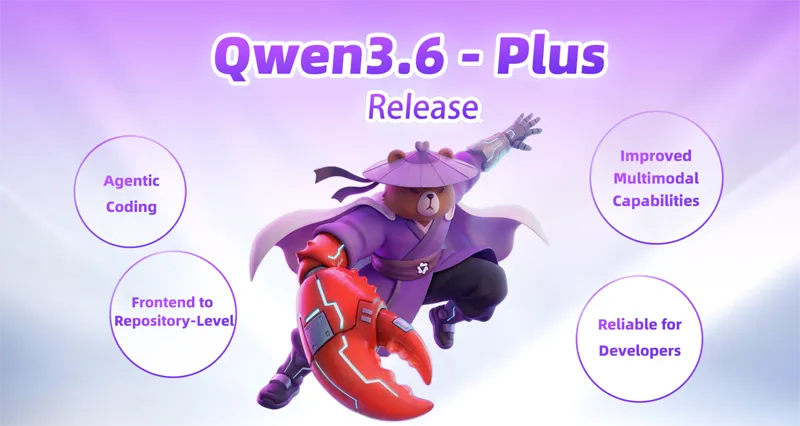
Alibaba's new leading model codes, tests, and debugs entire projects autonomously using a 1-million-token prompt. It generates web interfaces from screenshots, understands images and documents, and integrates directly with Claude Code via the Anthropic API
AI, no-code builder, smart links, e-commerce, and monetization in one platform! Pros include Intuitive drag-and-drop interface No coding skills required Built-in SEO tools Template variety User support center Affiliate programs Various pricing options 90+ video tutorials Discord community support Secure payment via Stripe Accepts multiple payment methods Instant website generation Responsive websites generation Enhanced online visibility Optimized web design process Easy web design customization Craft unique websites Suitable for different budgets Access to learning resources Social media integration Privacy policy and terms. Considerations include Support primarily on whop Limited template variety for AI Various pricing may suggest complex plans No apparent multi-language support channels.
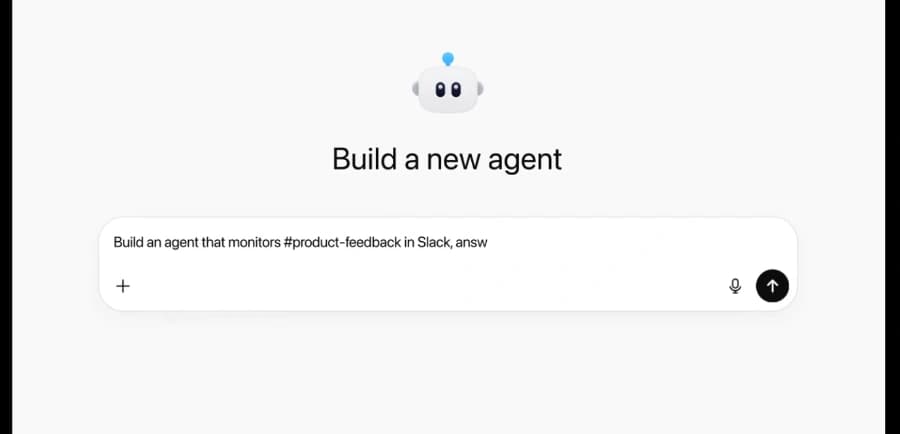
Automate your team workflows with shared agents that connect to your tools (Slack, CRM, Docs), run code, and track your processes. They can run in the background and handle recurring tasks such as lead qualification, feedback routing, or generating weekly reports
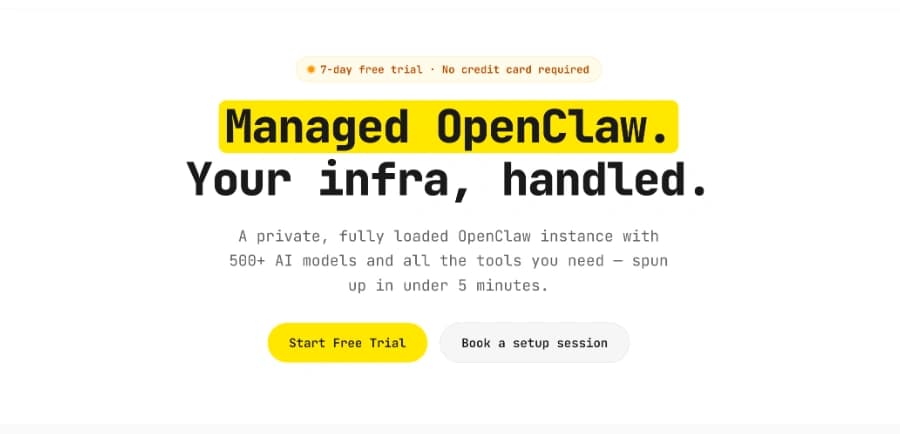
Deploy a fully managed OpenClaw agent in less than a minute, connected to over 500 chat models and 50 chat platforms, with scheduled tasks, enterprise-grade security, and zero DevOps to manage
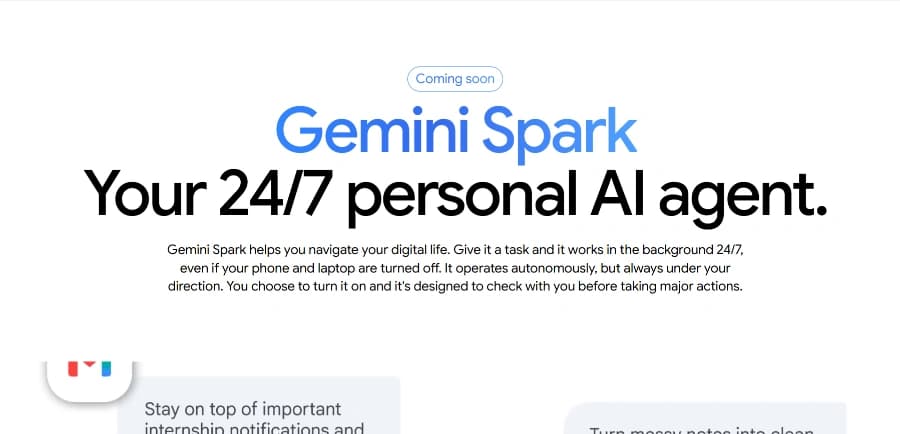
A personal AI assistant available 24/7, even when your device is turned off. It connects to Gmail, Calendar, Drive, and your Google apps to proactively act on your behalf and manage your daily tasks independently

Accelerate your research in biology, genomics, and drug discovery with a specialized model that combines advanced scientific reasoning, access to biomedical databases, and in-house agents. Ideal for analyzing, prioritizing, and designing end-to-end experiments
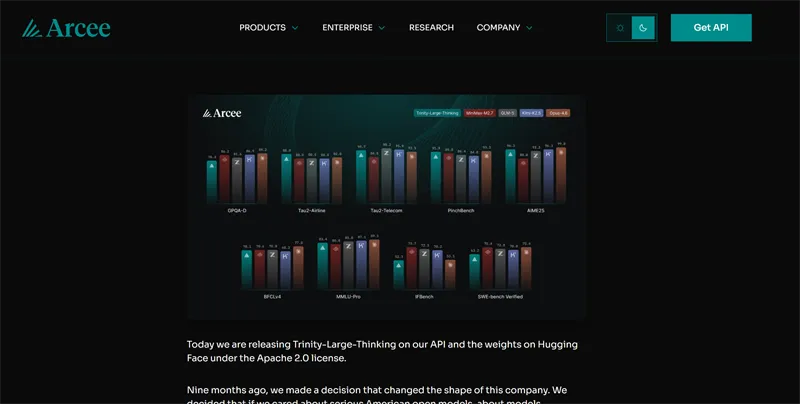
This open-source 400B-parameter model thinks before responding to handle long and complex prompts. It ranks just behind Claude Opus 4.6 on PinchBench and costs 96% less (Apache 2.0 license)