Keep comparing
Move from this focused guide into broader AIForest discovery paths.
Hurry up — get early exposure, backlinks, traffic, and reach thousands of AI enthusiasts before slots fill up.
Use this ChatGPT alternative guide to decide whether you need a broader assistant, a research-first tool, a writing specialist, or a team-ready AI workspace.
Who this helps
Knowledge workers, founders, marketers, developers, students, researchers, and teams comparing general-purpose AI assistants.
Common use cases
How to compare
Directory paths
Use these high-intent paths to compare tools by workflow, alternative, or founder listing intent.
Move from this focused guide into broader AIForest discovery paths.
List or improve an AI product that belongs near ChatGPT Alternative.
Alternative comparison guide
ChatGPT is often a serious shortlist option because it combines general chat, writing, coding help, file analysis, brainstorming, and multi-step assistant workflows. A search for a ChatGPT alternative usually means the buyer already understands the category and is looking for a better fit, lower cost, different workflow, or less friction. That is a stronger purchase-intent signal than a generic best-tools query.
The main reasons to compare alternatives are pricing fit, research citations, long-document handling, team controls, coding workflow, privacy expectations, or preference for a more specialized assistant. A good alternative page should not simply list competitors. It should explain when ChatGPT still makes sense, where it may be limiting, and which alternative patterns are worth testing before a team changes tools.
Start with reasoning quality, writing control, source handling, file support, coding help, memory or project organization, integrations, and collaboration. The right feature set depends on the work being repeated every week, not the longest marketing checklist. Compare how each product handles the source material, generates output, supports revisions, exports finished work, and fits the surrounding software stack.
Feature depth also includes control. A strong alternative should let users provide examples, preserve useful context, collaborate with teammates, recover from weak outputs, and understand why a recommendation was produced. If a tool only performs well in a demo prompt, it may not survive real production work.
Pricing should be judged through free-plan usefulness, individual versus team plans, usage caps, model access, file limits, admin controls, and whether the paid plan removes the actual bottleneck. Do not compare subscription prices alone. AI tools can differ on seats, credits, generation limits, model access, exports, storage, collaboration, API usage, and admin controls. A cheaper plan can become expensive if it creates more review work or forces manual handoffs.
Verify current pricing directly on official product pages before buying because AI plans change quickly. For purchase-intent pages, the durable question is whether the alternative gives the buyer the right balance of output quality, predictable limits, team control, and total workflow cost.
ChatGPT is usually strongest when users need a flexible assistant that can move between drafting, analysis, coding, ideation, and everyday productivity without changing products. These advantages matter because switching tools has a cost. If the product already fits the team's daily workflow, the best decision may be to improve prompts, templates, governance, or integrations instead of replacing it.
The product also benefits from user familiarity. Teams that have already built habits around a tool may move faster because they know its quirks, review needs, and export paths. Any alternative needs to beat that existing comfort by solving a specific problem, not just looking newer.
ChatGPT may be a weaker fit when the workflow requires source-first research, stricter enterprise governance, a specialized writing process, a different model style, or deeper integration with a specific work system. These limitations are not always product failures; they may simply reveal a mismatch between the buyer's workflow and the product's center of gravity. The important thing is to name the mismatch before procurement or migration starts.
Watch for hidden costs such as correction time, missing integrations, weak exports, confusing permissions, limited collaboration, stale context, or outputs that need heavy rewriting. Those issues often matter more than headline model quality because they decide whether a tool becomes part of the operating rhythm.
The best alternatives usually fall into research assistants, long-form writing tools, coding assistants, enterprise chat platforms, and productivity suites with embedded AI. A focused shortlist should include one close substitute, one specialist tool, and one workflow-adjacent option. That mix keeps the evaluation honest: some buyers need a similar product with different pricing, while others need a narrower tool that handles one job better.
Prioritize alternatives with clear source citations, strong file handling, transparent pricing, privacy controls, useful exports, and results that need less editing for the target workflow. Then test them using one research brief, one long document summary, one writing revision, one coding task, and one team collaboration scenario. The winner is the product that reaches an approved result with the least friction, not necessarily the one with the most recognizable brand or the largest feature page.
Explore relevant AI tools and compare their features, pricing, and fit for your workflow.
FAQ
The best alternative depends on your workflow, budget, integrations, review needs, and output quality requirements. Test close substitutes and specialist tools with the same real task before choosing.
Consider switching when pricing, workflow fit, collaboration, exports, privacy terms, or correction time consistently block the work you need to complete.
Compare current plan limits, seats, credits, exports, admin controls, and review time. The cheapest subscription is not always the lowest-cost workflow.

The official Mistral AI conversational assistant. Chat with an open-source ChatBot that rivals the best OpenAI models
Meet OpenAI's AI agent, an autonomous assistant that can automate all your tasks: research, analysis, calendar management, document creation and more. Take control of intelligent and secure automation

The world's most famous conversational assistant. Ask your questions and get precise answers
An assistant that provides you with a personalized summary of what interests you most every morning. Pulse analyzes your history, calendar, and preferences to provide you with proactive and targeted updates
AI wizard transforms instructions into code snippets. Pros include Instant Python code generation Additional toolkit features On-demand coding assistance Language conversion capabilities Automated comment generation Automated unit test generation Code quality improvement suggestions Personal Python expert model Efficient instruction-based coding Multi-language support Specific language Code Assistants Detailed code explanations Advanced code enhancement Code readability maintenance Deep learning libraries support Supports web scraping libraries Supports various databases Supports web programming Effortlessly produces Python code Improves coding productivity Innovative tech in coding Automated code production Software development tool facilitation Code explanation provision Supports efficient workflow Database specific coding solutions Web scraping specific coding Web programming specific coding Instruction based Web scraping Instruction based Web programming Strong community and documentation Deep learning application instructions. Considerations include Over-reliance on user instructions No offline use May not understand complex instructions Lacks multi-language support Limited free usage.
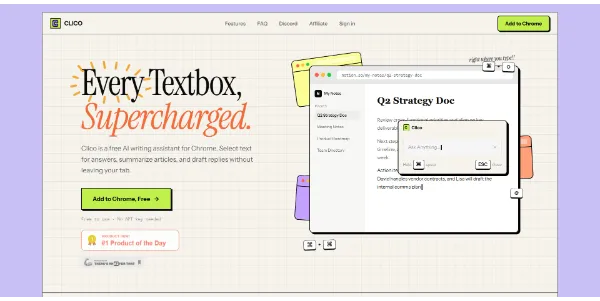
This AI assistant integrates into every text field in your browser (Gmail, Notion, Slack, LinkedIn, etc.) to help you write, reply, rephrase, or dictate instantly. You stay in the same context without switching tabs or copying and pasting. Available via a Chrome extension
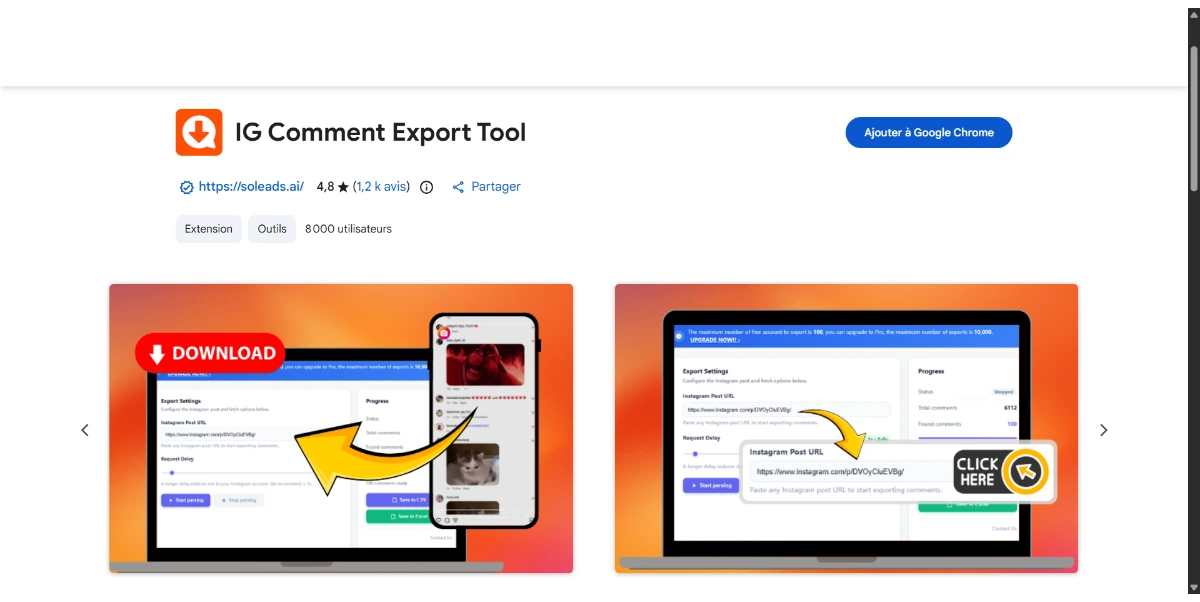
Export all comments from an Instagram post to Excel or CSV with a single click. This Chrome extension automatically collects the text, author, date, and profile photo to provide you with a file you can use for your analytics or marketing campaigns
Write research papers faster. AI cites sources, completes your sentences, summarizes papers and paraphrases. Export to LaTeX or Word
An AI assistant with growing capabilities and impressive performance. Its context window approaches one million tokens
Plan your trip with the official AI assistant from the famous TripAdvisor website. Receive free itineraries and useful tips
An AI assistant created by xAI (Elon Musk). It answers your questions based on real-time data from X users
A powerful AI chat assistant from Google that rivals ChatGPT in performance
An AI research assistant to organize and analyze your documents. Import your sources, ask questions and obtain intelligent summaries to better understand and exploit your information
An AI assistant that automates your job search by applying up to 50 times a day to 50,000 job boards. It generates personalized cover letters, optimizes your applications and trains you for job interviews
Automate your daily web tasks with an agent that navigates the web like a human (via ChatGPT). Book travel, order groceries and fill out forms effortlessly with a 100% autonomous assistant
Soul Machines Studio software tools allow you to easily customize, train, and deploy your own autonomous, interactive AI Assistant
An AI assistant for meetings that automatically captures notes and action items. Enjoy centralized management of recordings and summaries. Includes confidentiality controls to ensure secure access
Keep your notes, emails, and web pages in one place that you can access with just one click. Find everything you're looking for with semantic search and get smart summaries
Send personalized WhatsApp campaigns without saving contacts, import CSV lists, schedule with anti-blocking intervals, track deliveries in real time, and resend with one click
An automatic e-commerce and Wordpress site builder with AI tools to improve the quality of your sites
A versatile assistant to help you every day. Get customized solutions and useful information at any time
An intelligent assistant for investors combining news and social network data for a comprehensive stock market analysis. Ideal for tracking trends and optimising trading decisions
Manage your projects faster with a platform that brings teams, tasks, and documents together in one place. Its built-in AI summarizes your notes, writes for you, and automatically organizes your priorities
A secure, easy-to-use electronic signature solution. Integrate signatures into your workflows, automate processes and speed up the conclusion of your contracts
Get personalized shopping guides, product recommendations and answers to your questions with Rufus, Amazon's AI shopping assistant
An AI-powered work management platform. Manage projects, tasks and business processes with intelligent automation, customizable dashboards and over 200 ready-to-use templates
A 14-billion-parameter language model that excels at complex reasoning, especially mathematics. Trained mainly on high-quality synthetic data, it outperforms larger models on certain specialized tasks
An AI agent creator that automates your daily tasks. Manage emails, meetings and customer support with intelligent assistants that integrate with all your business tools
An AI inbox that connects to your Gmail and can perform all kinds of tasks: write e-mails, organize your messages, schedule meetings and more
Find thousands of potential customers in seconds. Simply describe your ideal prospect, and AI will provide you a list of verified, ready-to-use contacts