読み込み中...
AI Competitor Landing Page Comparison: Build an Evidence Matrix
Compare public landing pages fairly, separate missing evidence from missing features, and improve concrete information gaps.
Explore related tools
Directory matches to help you build a shortlist. Verify each tool against your requirements.

Compare a buyer's task, not just page design
AI competitor landing page comparison can help organize what different products promise, but it should start with a specific buyer question. A comparison of colors, headline length, and button counts rarely explains why someone would choose one product. Our example compares three fictional scheduling products for independent consultants.
The question is whether a buyer can understand setup, booking limits, and calendar compatibility from the public pages. Define your audience and decision before gathering material. Otherwise the assistant may reward the most persuasive copy rather than the product information a reader actually needs. Treat marketing statements as claims to examine, not proof that a feature works as advertised.
Collect comparable public evidence
Firecrawl provides tools for extracting website content into formats suitable for analysis. It can help collect public page text, while a browser review remains useful for visual context and information hidden behind interaction. A writing assistant can then structure the comparison. Check site access conditions and avoid bypassing authentication or restrictions.
Capture the page URL and collection date beside each excerpt. Use equivalent pages for each product: home page, relevant feature page, and pricing or help page where needed. Do not compare one vendor's detailed documentation with another vendor's short headline and call the difference a missing feature. Missing evidence should stay labeled as missing evidence.
Source: Firecrawl web extraction tools.
Build a neutral comparison matrix
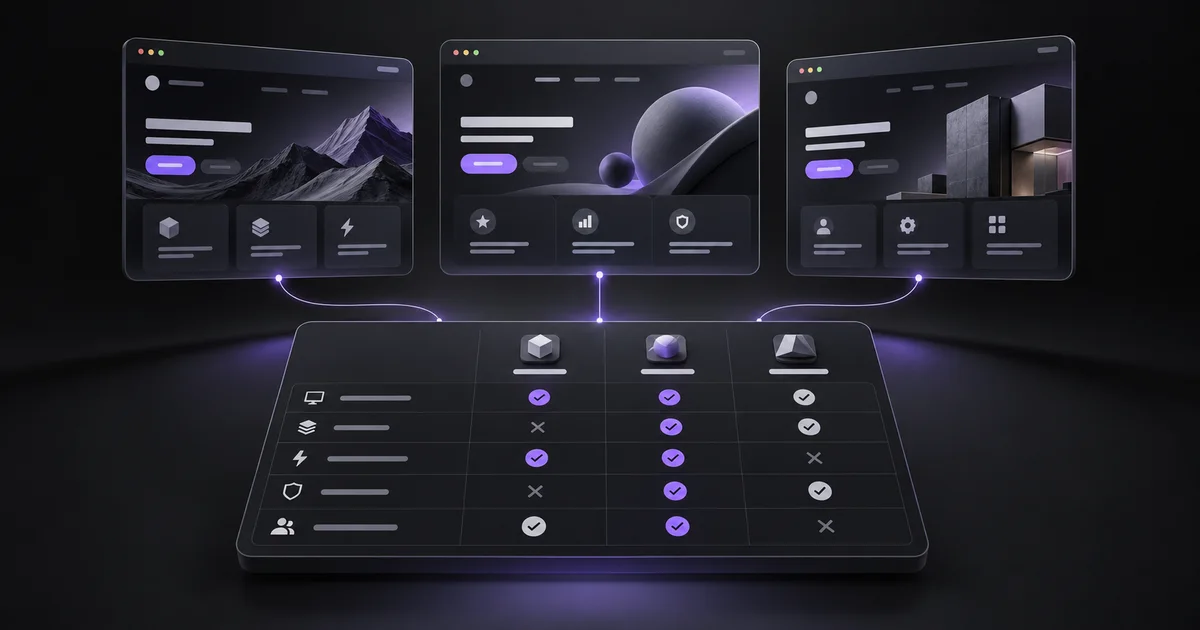
Choose fields that connect to the buyer's task: supported calendars, setup steps, stated booking limits, relevant plan restrictions, and help resources. Include an evidence URL for each factual entry. Separate explicit statements from your interpretation.
In our fictional example, one page mentions two calendar providers, another says “popular calendars” without naming them, and a third links to a compatibility list. The second entry should be “not specified on the reviewed page,” not “unsupported.” This language is fairer and easier to update. Add a notes column for uncertainty, especially when pricing, limits, or availability depend on a plan or region.
Ask for extraction before evaluation
Use: “Compare these supplied landing-page excerpts for an independent consultant choosing a scheduling product. Extract only stated facts into the requested fields. Attach the supporting URL to each entry. Mark missing information as not stated.
Do not infer capabilities from slogans. Separate observations from recommendations and list questions that require documentation or product testing.” Paste the materials and fields. Review the extraction first, then ask for an interpretation based on the approved matrix. Combining collection, inference, and ranking in one prompt makes mistakes harder to find. A clear two-stage process lets you correct a wrong fact before it influences the recommendation or a critique of your own page.
Look for information gaps on your page
Suppose buyers can find setup steps on competitors' pages but your page only says “effortless scheduling.” That suggests adding a short explanation of the real setup process. If calendar compatibility is a common question, link to a verified list rather than copying another site's wording. If your product has a meaningful limitation, state it clearly near the relevant feature.
The objective is to help visitors evaluate fit, not reproduce a competitor's layout or claims. Use the matrix to identify unanswered questions and test them with actual prospects. A missing detail in your copy is actionable; a speculative claim that another company converts better is not supported by public page text.
Avoid unfair rankings and fabricated precision
Do not ask AI to assign conversion scores from screenshots without reliable data. Public pages cannot reveal sales performance, retention, or customer satisfaction by themselves. If you publish a comparison, explain the scope, date, and criteria, and give each product a fair opportunity to demonstrate the relevant capability.
Link to primary sources and distinguish tested behavior from vendor statements. Avoid absolute language such as “best” unless you define the audience and trade-offs. Affiliate or commercial relationships should be disclosed where applicable. A useful comparison gives readers evidence and questions to ask, rather than pretending a polished table removes the need to check current product information.
Validate changes with a small experiment
Choose one information gap and improve it on your own landing page. For example, add a concise setup section with actual screenshots and prerequisites. Observe whether relevant support questions decline and whether visitors reach the intended next step. Keep other major changes stable so the result is easier to interpret.
Small traffic volumes may not support strong statistical conclusions, but qualitative feedback can still reveal confusion. Record the hypothesis, change, dates, and measurement definition. Do not label a new headline a winner solely because a few more people clicked it. The comparison process should lead to clearer product communication before it leads to claims about performance.
Keep the evidence current
Store excerpts, source links, collection dates, and approved matrix entries together. Review them when vendors change plans or documentation. A comparison that was accurate last month can mislead readers after a product update.
Use AI to reduce organization work, while retaining human responsibility for factual statements and fair wording. Browse research, website analysis, and writing tools on AIForest to choose a workflow that fits your team. Start with three products and a single buyer task. If the resulting matrix does not help someone make a decision or improve a concrete page section, narrow the question rather than adding more competitors.
Sources and editorial notes
Product references were checked on 7 October 2026. Examples and prompts are illustrative workflows, not claimed customer results or hands-on product benchmarks. Check current vendor documentation before choosing a plan.
Find tools for your workflow →Keep exploring
自動翻訳が利用できない場合、一部のツールの説明は英語で表示されることがあります。