Keep comparing
Move from this focused guide into broader AIForest discovery paths.
Hurry up — get early exposure, backlinks, traffic, and reach thousands of AI enthusiasts before slots fill up.
Use this Gamma alternative guide to compare AI presentation and document tools for decks, proposals, reports, and web-friendly narratives.
Who this helps
Founders, sales teams, consultants, educators, marketers, operators, and teams building presentations or narrative documents.
Common use cases
How to compare
Directory paths
Use these high-intent paths to compare tools by workflow, alternative, or founder listing intent.
Move from this focused guide into broader AIForest discovery paths.
List or improve an AI product that belongs near Gamma Alternative.
Alternative comparison guide
Gamma is often a serious shortlist option because it turns prompts and source material into flexible presentation-like pages, decks, documents, and shareable narratives. A search for a Gamma alternative usually means the buyer already understands the category and is looking for a better fit, lower cost, different workflow, or less friction. That is a stronger purchase-intent signal than a generic best-tools query.
The main reasons to compare alternatives are PowerPoint compatibility, brand controls, slide precision, team templates, export fidelity, pricing, analytics, or a more traditional presentation workflow. A good alternative page should not simply list competitors. It should explain when Gamma still makes sense, where it may be limiting, and which alternative patterns are worth testing before a team changes tools.
Start with outline generation, slide quality, layout control, brand templates, media handling, collaboration, sharing, analytics, and export fidelity. The right feature set depends on the work being repeated every week, not the longest marketing checklist. Compare how each product handles the source material, generates output, supports revisions, exports finished work, and fits the surrounding software stack.
Feature depth also includes control. A strong alternative should let users provide examples, preserve useful context, collaborate with teammates, recover from weak outputs, and understand why a recommendation was produced. If a tool only performs well in a demo prompt, it may not survive real production work.
Pricing should be judged through free-plan limits, export rules, AI credits, team seats, branding controls, analytics, custom domains, and how often decks need to be shipped. Do not compare subscription prices alone. AI tools can differ on seats, credits, generation limits, model access, exports, storage, collaboration, API usage, and admin controls. A cheaper plan can become expensive if it creates more review work or forces manual handoffs.
Verify current pricing directly on official product pages before buying because AI plans change quickly. For purchase-intent pages, the durable question is whether the alternative gives the buyer the right balance of output quality, predictable limits, team control, and total workflow cost.
Gamma is usually strongest when users need to move quickly from rough notes to a polished, web-friendly narrative that can be shared and revised easily. These advantages matter because switching tools has a cost. If the product already fits the team's daily workflow, the best decision may be to improve prompts, templates, governance, or integrations instead of replacing it.
The product also benefits from user familiarity. Teams that have already built habits around a tool may move faster because they know its quirks, review needs, and export paths. Any alternative needs to beat that existing comfort by solving a specific problem, not just looking newer.
Gamma may be a weaker fit when the final deliverable must behave like a traditional slide deck, follow strict brand systems, export cleanly to PowerPoint, or support formal approval workflows. These limitations are not always product failures; they may simply reveal a mismatch between the buyer's workflow and the product's center of gravity. The important thing is to name the mismatch before procurement or migration starts.
Watch for hidden costs such as correction time, missing integrations, weak exports, confusing permissions, limited collaboration, stale context, or outputs that need heavy rewriting. Those issues often matter more than headline model quality because they decide whether a tool becomes part of the operating rhythm.
The best alternatives usually fall into AI presentation builders, design suites, slide-specific tools, document-to-deck generators, and collaborative workspace tools. A focused shortlist should include one close substitute, one specialist tool, and one workflow-adjacent option. That mix keeps the evaluation honest: some buyers need a similar product with different pricing, while others need a narrower tool that handles one job better.
Prioritize alternatives with brand governance, editable slide layouts, export quality, collaboration, accessibility, media support, and compatibility with existing presentation habits. Then test them using one sales proposal, one investor update, one research brief, one branded template revision, and one export into the team's normal deck workflow. The winner is the product that reaches an approved result with the least friction, not necessarily the one with the most recognizable brand or the largest feature page.
Explore relevant AI tools and compare their features, pricing, and fit for your workflow.
FAQ
The best alternative depends on your workflow, budget, integrations, review needs, and output quality requirements. Test close substitutes and specialist tools with the same real task before choosing.
Consider switching when pricing, workflow fit, collaboration, exports, privacy terms, or correction time consistently block the work you need to complete.
Compare current plan limits, seats, credits, exports, admin controls, and review time. The cheapest subscription is not always the lowest-cost workflow.

Grow your brand by reaching millions of customers on TikTok with precise targeting in over 20 global markets. Launch your advertising campaigns in minutes with budgets tailored to all businesses

Automate your work with AI agents that answer questions, generate weekly reports, and provide real-time insights. Benefit from integrations with Google Drive, GitHub, Salesforce, and over 20 other applications.
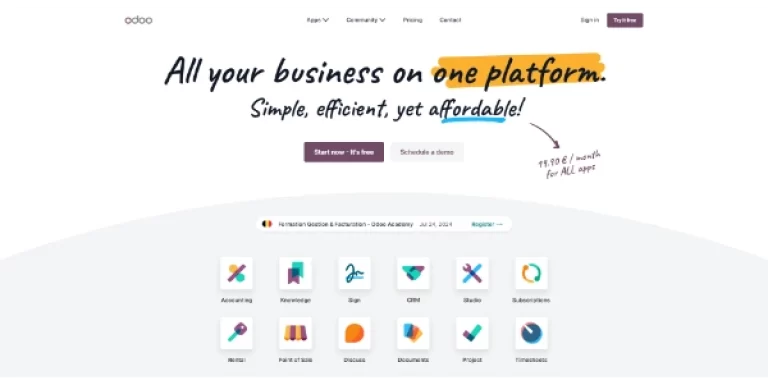
Open-source, customizable, all-in-one CRM and ERP management software. Over 40,000 applications are available on the platform, including AI assistants
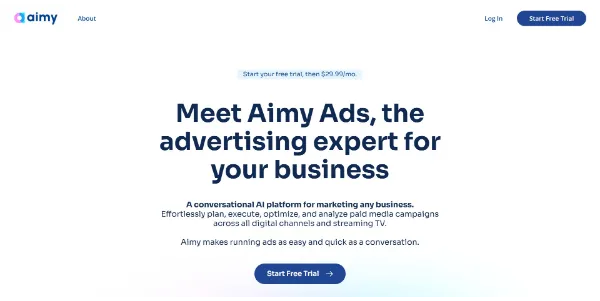
Launch and manage your advertising campaigns on Google, Meta, TikTok, etc. Use an AI tool that plans, executes, optimizes, and analyzes your campaigns without requiring media buying expertise.

An AI platform that redefines business data management via premium tools like ChatD&B and SmartMail AI. Access real-time insights, automate your marketing campaigns and get genuinely reliable data
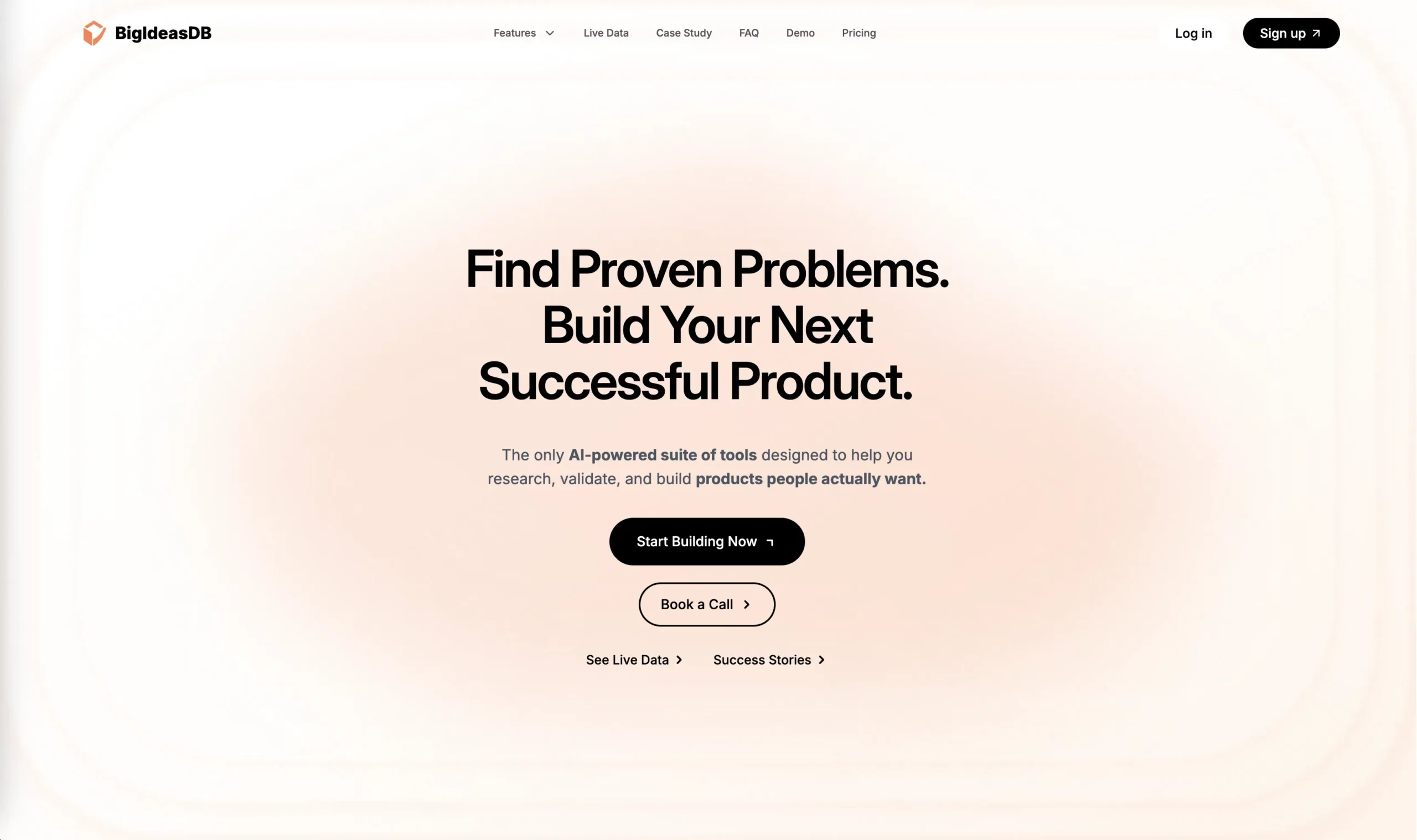
An AI-powered platform that analyzes millions of Reddit posts, G2 reviews, Capterra feedback, Upwork jobs, and app store reviews to help entrepreneurs discover validated startup ideas, plan products, and build with confidence using proven market demand

A complete AI solution to optimize your restaurant management. Customize menus, automate orders and payments to improve the customer experience and increase your revenues
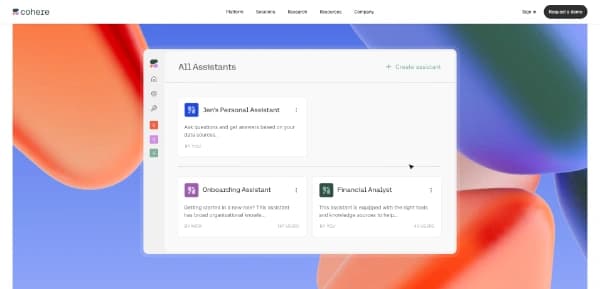
Create personalized AI assistants for your company's workflows. Integrate intelligent search and secure content generation
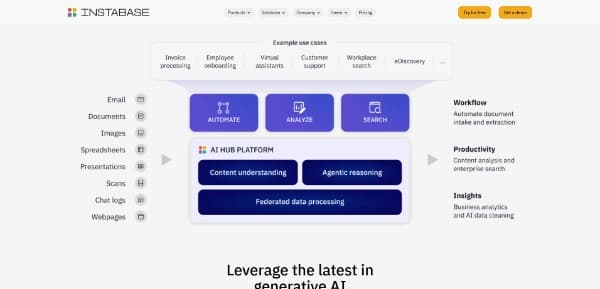
An AI tool that automates the processing of your unstructured documents. Analyze PDFs, images and spreadsheets to extract relevant information and make better decisions
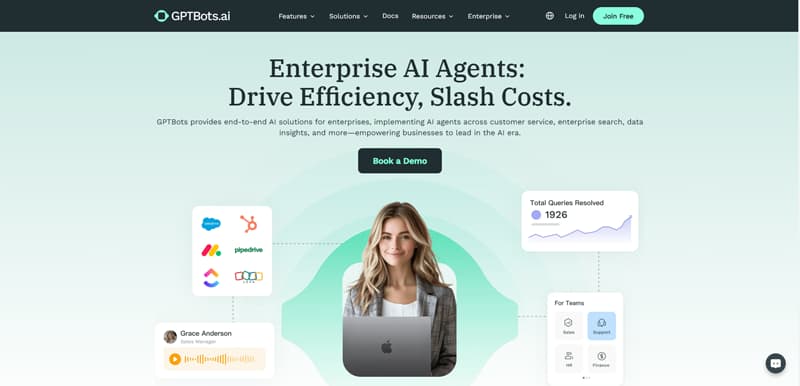
The Ultimate AI Agent Development Platform. Build, customize, and deploy intelligent agents tailored to your business needs. Simplify workflows, enhance customer experiences, and unlock new growth opportunities with ease
A set of tools to automate your repetitive tasks in various business sectors. Save time by entrusting manual processes to intelligent software robots (RPA)
An AI accounting assistant to simplify your financial management. Automatically import transactions, generate reports, fill out tax forms and get real-time financial advice

Intelligent technology for autonomous retail outlets. Install sales stands in 1-2 weeks, with 99.2% accuracy and a rapid return on investment thanks to AI systems
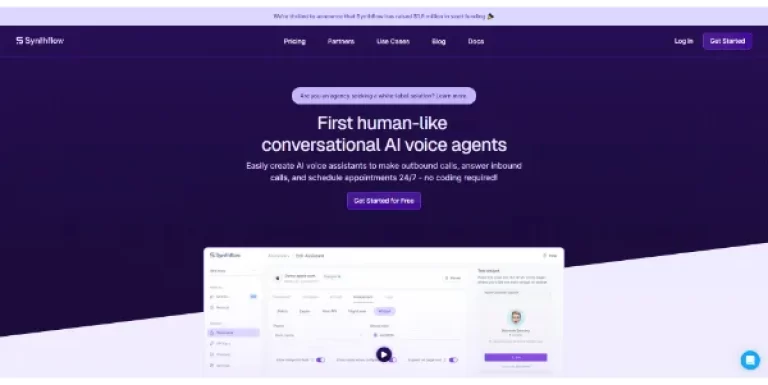
AI voice assistant with a human voice that automates your calls 24/7. Ideal for automated sales or appointment scheduling
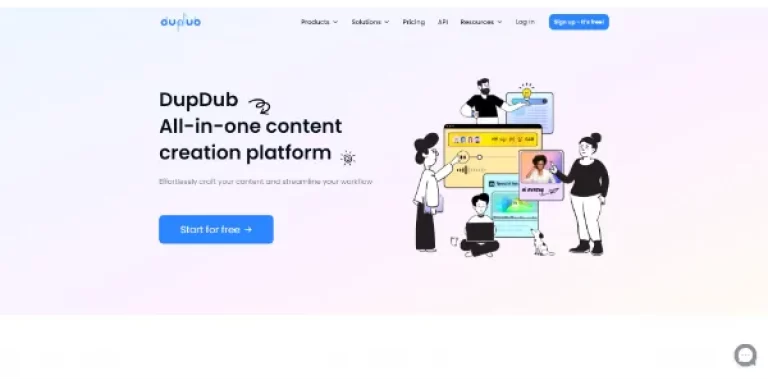

Turn your knowledge database into a conversational AI assistant in minutes. Resolve 70% of customer questions 24/7
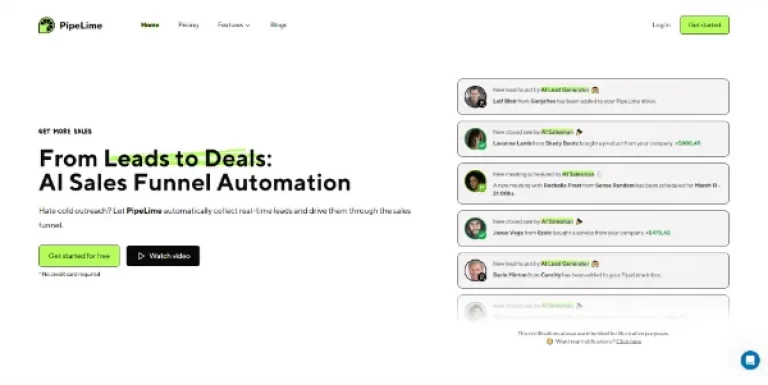
Optimize your sales by generating qualified leads with AI-driven automation. Rapidly improve your conversion rate
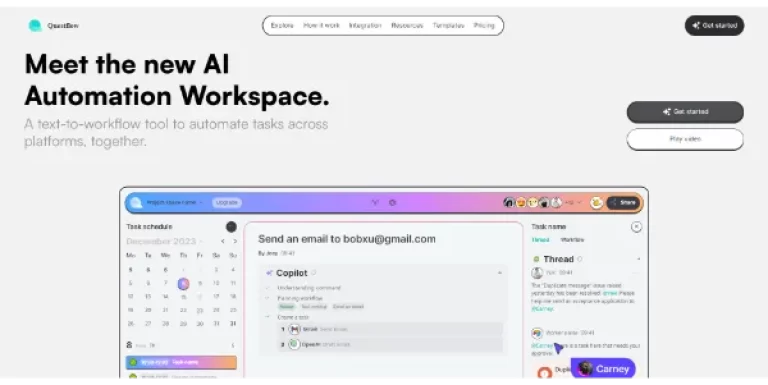
A collaborative workspace for team automation: emails, calendars, social networks, data, etc.
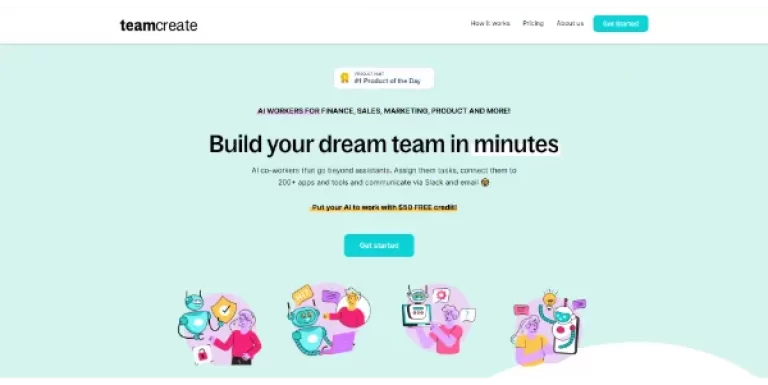
Create a customizable team of AI assistants for a variety of enterprise roles. Automate your tasks via Slack and 200+ apps without coding

Give your business a boost with AI-powered automation. Optimize customer support, content creation and more

AI-based service helps create unique, eye-catching book covers

A simple way to generate artistic images using Stable Diffusion


Upload 10 photos of yourself and the AI transforms you into various artistic styles. Printable on posters, mugs, etc.

An AI that generates stunning vector illustrations from text
An AI that turns your ideas into works of art. Generate images, animations, pixel art, etc.

An image generator that can work with plugins. Automatic sharing on social networks


A website for generating QR codes that lets you easily manage personalization options. Possibility of animating your QR Code